Q&A Time: Let’s Talk Animal Welfare!
As part of our 30-day journey, we’d love to hear from you! Share your questions, thoughts, and experiences on animal welfare, and we’ll do our best to respond.
Q: What are some simple ways to promote animal welfare in our daily lives?
A: – Choose products with certified animal welfare labels.
– Support local, humane farms.
– Reduce food waste to minimize animal suffering in agriculture.
– Spread awareness about animal welfare issues.
Q. Can animals be happy or sad?
A: Animals have the basic emotions of seeking, rage, fear, panic, lust, care and play. Animals react when their needs are met or not met. When they react, they can seem happy or sad to us. For example, when an animal’s play emotion is met, it looks happy to us.
Q: Do all animal need the same things?
A: Yes and no. All animals require The Five Freedoms:
1) freedom from hunger and thirst;
2) freedom from discomfort;
3) freedom from pain, injury or disease;
4) freedom to express natural behaviors and
5) freedom from fear and distress.
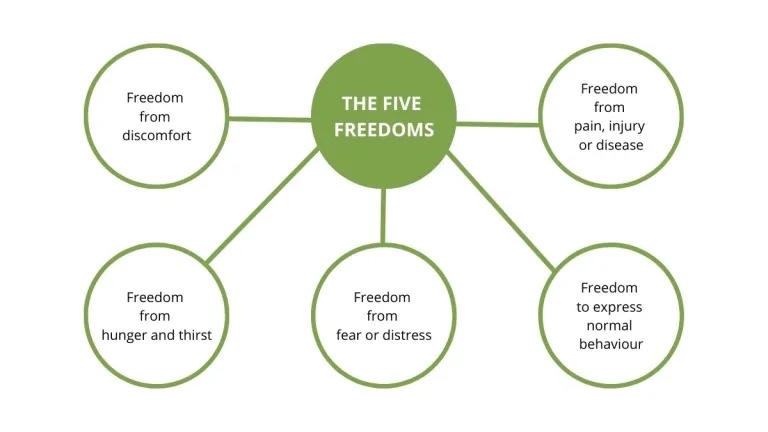
The way those freedoms are met for each species can differ. For example, although ducks and chickens are both poultry, ducks need a poo of water to express their natural behavior, but chickens don’t.
Q. How do you decide what is good animal well-being?
A. A person can assess the animal’s situation by using The Five Freedoms to ask the following questions:
1)Does the animal have food and water?
2) Is the animal free from discomfort?
3) Is the animal free from pain, injury or disease?
4) Is the animal free to express its natural behavior?
5) Is the animal free from fear and distress?
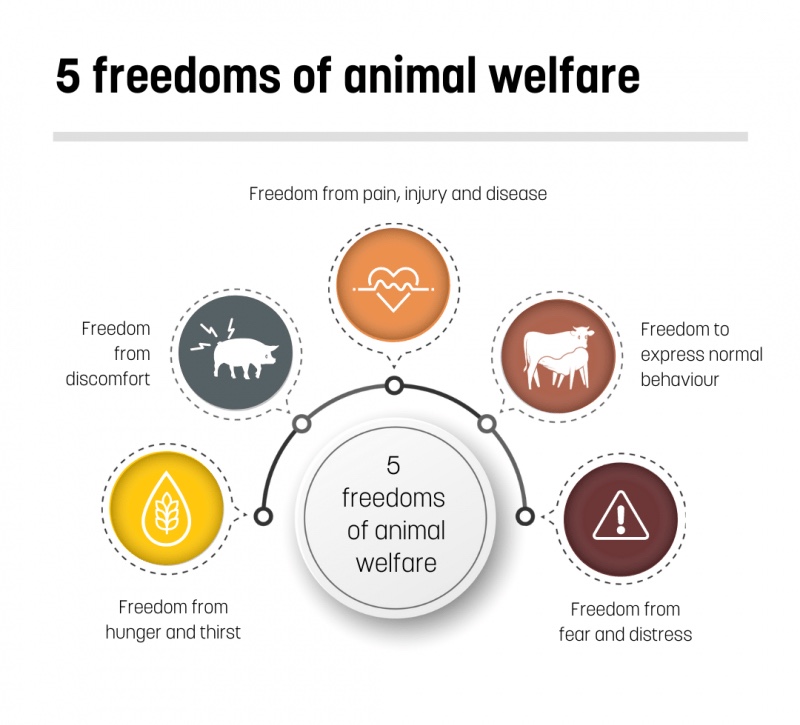
Animal well-being is a continuum, meaning it can range from very good to very poor and be anywhere along the imaginary line.
Question
What’s one thing you wish more people knew about animal welfare?

 THE ANIMAL WELFARE BLOG